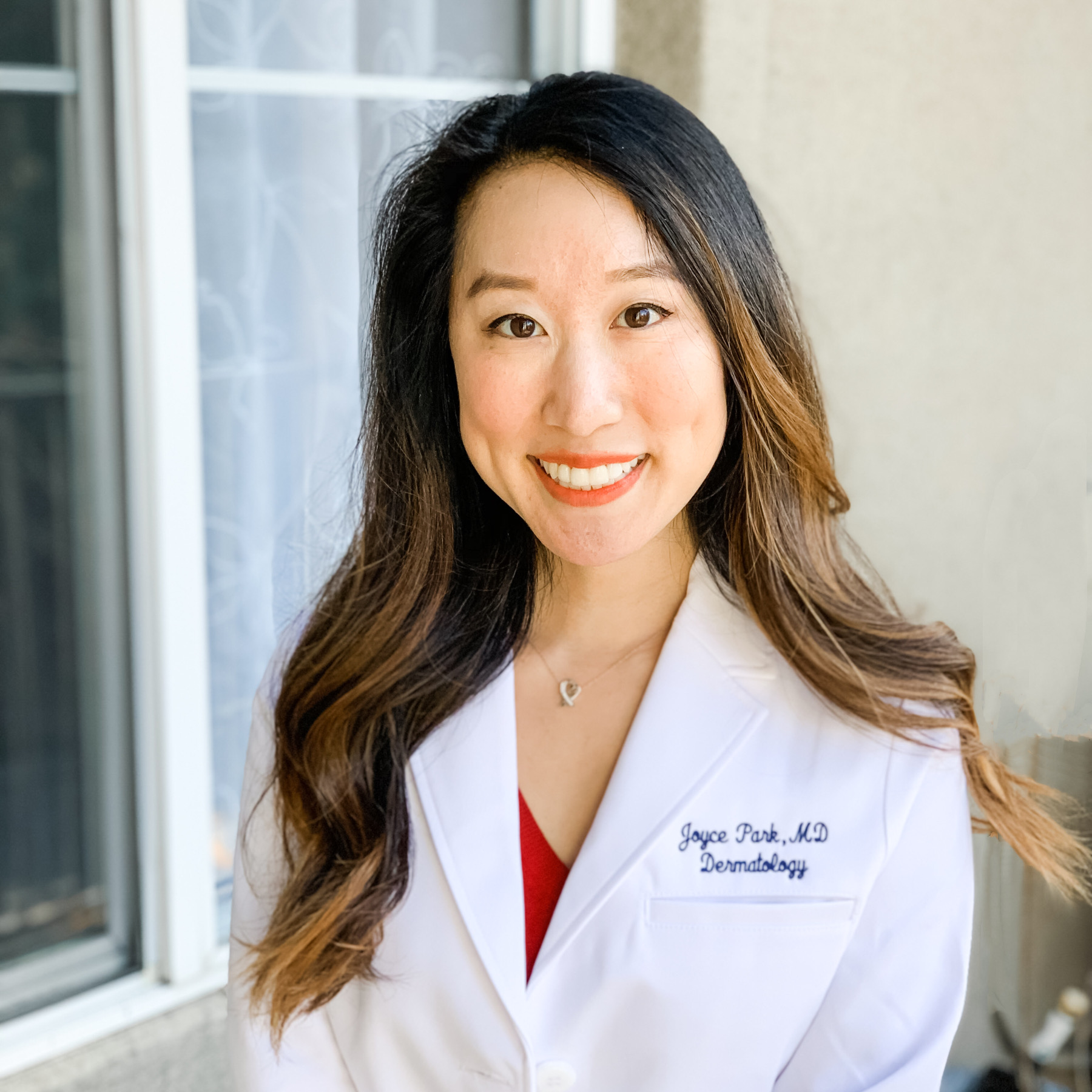

When evaluating any hair loss treatment, the first question I ask is not “does it work?”, it’s “how do we know?” The hair care industry is full of products making impressive claims backed by weak or misleading evidence. As a board-certified dermatologist, I evaluate clinical evidence for a living, and I want to give you the framework to do the same. Understanding what rigorous testing looks like will help you invest in treatments that are actually likely to work, and recognize the ones that are not.

Why Clinical Evidence for Hair Loss Products Is Often Misleading
The FDA does not require cosmetic hair care products, including most shampoos and scalp serums sold over the counter, to undergo the same pre-market testing as drugs. This means manufacturers can make structure/function claims about how a product affects the appearance of hair without demonstrating that the formula as a whole works in the way they imply.
The result is a landscape where the vast majority of “clinically studied*” claims in hair care fall into one of these categories:
Ingredient-level claims. The evidence comes from research on an isolated ingredient, often tested in vitro (in a lab dish) or in a separate formulation, not on the final product itself. This is like evaluating each ingredient in a medication separately and then claiming the full pill is proven. The interaction between ingredients, the concentrations used, the delivery vehicle, and how the formula performs in real-world conditions all matter enormously.
Consumer perception studies. Participants use the product and report what they notice. These are valuable for understanding user experience, but they are inherently subjective and susceptible to placebo effect. Perception studies without a control group or blinding should be interpreted with significant caution.
Before-and-after photography. Lighting, styling, and camera angle can dramatically affect how hair appears. Standardized photography under controlled conditions is meaningful; uncontrolled before-and-after images are not.
None of these on their own constitute rigorous clinical evidence. What does?
What Rigorous Hair Loss Clinical Testing Actually Looks Like
When I evaluate clinical evidence, whether for a study I’m reading in a journal or a claim a brand is making, I look for these elements:
Testing of the final formula, not just individual ingredients. The product that was clinically tested should be the same product being sold. Formulations are complex systems, and an ingredient that shows efficacy in isolation may behave differently in a finished product at different concentrations and in combination with other components.
Objective, standardized measurement. Hair density and volume can be measured objectively through standardized phototrichogram (scalp photography under consistent lighting and positioning with computer-assisted hair count analysis) or through board-certified dermatologist evaluation using validated grading scales. These are the standard in legitimate hair loss clinical research.
Statistical significance. Results should include p-values or confidence intervals indicating the likelihood that findings reflect a real effect rather than chance. A statistically significant result (typically p < 0.05 or below) means there is less than a 5% probability the observed change occurred by chance.
Controlled conditions. Participants should not be using other hair growth treatments during the study period, or those treatments should be at stable doses controlled for at baseline. Without this, it’s impossible to attribute results to the product being tested.
Adequate study duration. Hair growth happens slowly. Meaningful clinical studies of hair loss treatments run for a minimum of 12 to 24 weeks. Studies shorter than 12 weeks may capture early scalp health changes but cannot reliably assess hair density outcomes.
Representative participants. A study that only includes one demographic, one hair type, or a narrow age range has limited generalizability. Well-designed studies include diverse participants across multiple hair types, ethnic backgrounds, and ages within the target population.

How I Applied This Standard When Developing Kerativ
When I started developing Kerativ, I made one non-negotiable decision: I would not launch without demonstrating efficacy through clinical testing of the finished formula. As a dermatologist, my recommendations are grounded in evidence, that standard carried into every decision behind this brand.
I designed a hybrid clinical study for the Redensify Treatment Serum that combines three measurement approaches: board-certified dermatologist evaluation of hair density and volume using a standardized grading scale, standardized photography under controlled conditions, and consumer perception questionnaires. Participants were not using minoxidil or other topical hair growth treatments during the study period. Those on prescription therapies were enrolled only if on stable doses prior to the study.
The 24-week study enrolled 32+ participants with clinically assessed mild to moderate hair thinning, across multiple hair types and ethnic backgrounds, ages 18 to 55.
At 12 weeks, dermatologist assessment showed a 15.6% mean increase in hair density from baseline, which was statistically significant (p < 0.001). Participant-reported outcomes aligned with the clinical findings: 100% reported satisfaction with their results after three months, 97% reported improved hair volume, and 91% noticed improvement in the appearance of thinning.
This is the kind of evidence I look for when I recommend a treatment to my patients, and it’s the standard I held myself to when building Kerativ’s Redensify Treatment Serum.
Reading Clinical Claims: A Practical Checklist
When you see a hair loss product making clinical claims, here are the questions I recommend asking:
- Was the final formula tested, or just individual ingredients?
- Was hair density measured objectively, or only through self-report?
- Is there statistical significance reported (p-value)?
- How long did the study run? (Less than 12 weeks is a red flag for density claims)
- Were participants controlled for confounding treatments?
- Who conducted the evaluation, independent researchers or the company itself?
- How many participants were included? (Small studies have limited statistical power)
- Was the study published or peer-reviewed?
A product that can answer these questions with transparency is one worth considering. Many brands in this space cannot, and that tells you something important.
The Role of Established Ingredient Research
Beyond finished-formula testing, it’s also worth understanding the evidence behind specific ingredients. Some have accumulated meaningful research over years; others are newer with more limited data.
Minoxidil is the most extensively studied topical hair loss treatment, FDA-approved for both men (since 1988) and women (since 1991). Its mechanism involves extending the anagen phase and increasing follicle size. The evidence base is large and well-controlled.
Redensyl is a plant-derived complex studied for its effects on hair follicle stem cells. A 2014 published study demonstrated improvements in hair density versus placebo after 84 days of use. Multiple subsequent studies have supported this mechanism.
Caffeine has demonstrated in vitro activity against DHT-induced follicle suppression and follicle-stimulating effects in multiple studies, including a 2007 paper in the International Journal of Dermatology. While caffeine-containing products have limited contact time when used in rinse-off formats, leave-on applications offer longer follicle exposure.
Adenosine has been studied in randomized controlled trials, including a 2012 study in the Journal of Dermatological Science, showing improvements in hair thickness and density with topical application.
The strongest products in this space combine ingredients with independent evidence bases at meaningful concentrations, tested together in the finished formula. That combination, not just an ingredient label, is what you’re ultimately paying for.
I developed Kerativ after years of seeing patients invest in products that made impressive claims without the evidence to back them up. If you want to read more about how I approached the clinical testing behind Kerativ’s formulas, I wrote about it in detail on the Kerativ blog: Proof Over Promises: Inside Kerativ’s Clinical Trial.
Frequently Asked Questions
What does “clinically studied*” actually mean on a hair care label?
It means very little without context. The phrase “clinically studied*” is not regulated by the FDA for cosmetic products, so companies can apply it to evidence ranging from small consumer perception surveys to rigorous controlled trials. Always look for specifics: what was measured, how many participants, over how long, and whether the evidence comes from the finished formula or individual ingredients. Transparency about methodology is the signal of legitimate clinical support.
Is a 15% improvement in hair density clinically meaningful?
A 15.6% mean improvement in hair density from baseline, measured by dermatologist assessment with statistical significance at p < 0.001, is a meaningful result in hair loss clinical research. For context, 2% minoxidil studies have demonstrated increases in hair count in the range of 10-20% in various populations. The key markers of validity are objective measurement, blinded or independently conducted assessment, statistical significance, and adequate study duration, all of which should be present for a claim to be credible.
How can I verify the clinical claims a hair loss brand makes?
Start by asking the brand directly: request access to the study methodology, participant demographics, outcome measures, and statistical results. Legitimate brands with genuine clinical evidence are happy to share this detail. You can also search PubMed for published research on the specific ingredients the brand uses, and cross-reference the concentrations in the formula against what was studied. If a brand refuses to share study details or can only point to ingredient-level research, treat claims with skepticism.
Should I choose a hair loss treatment based on ingredients or clinical trials on the finished formula?
Both matter, and ideally you want both. Understanding the ingredient evidence tells you what mechanisms are at play and what concentrations are meaningful. Finished-formula clinical data tells you how those ingredients perform together in real-world conditions. The best products have a strong ingredient rationale supported by evidence on the finished formula itself. When you can only find one or the other, ingredient-level evidence at clinically studied concentrations is more reliable than a consumer perception study on the finished product.



Leave a Reply